
Posted by Blue Thumb on Jun 5th 2026
Why Is My Pond Water Green? How to Clear and Prevent Green Pond Water
Green is a beautiful color in your landscape, but not when it takes over your pond water.
For many homeowners, green pond water is one of the first frustrating problems that shows up after installing or taking over a backyard pond. One week, the water looks clear and peaceful. A few days later, it looks like pea soup. You can barely see your fish, the rocks disappear, and the whole pond starts to feel neglected even if you have been trying to maintain it.
The good news is that green pond water is common, predictable, and fixable. Once you understand what causes it, you can treat the problem more effectively and help prevent it from coming back.
Whether you are a homeowner trying to enjoy a backyard koi pond or a contractor helping a customer solve water clarity issues, the goal is the same: reduce the algae’s food source, improve water movement, support beneficial bacteria, and keep debris from breaking down in the pond.
Quick Answer: Why Is My Pond Water Green?
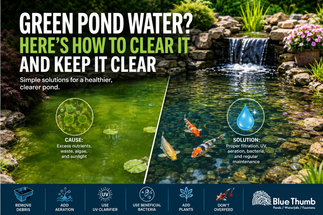
Pond water turns green when tiny floating algae multiply in the water. This usually happens when the pond has too many nutrients from fish waste, uneaten food, leaves, sludge, or decaying plants. Sunlight, poor filtration, low oxygen, and weak water movement can make the problem worse.
To clear green pond water, focus on removing debris, improving filtration, using beneficial bacteria, checking your UV clarifier, and keeping the water moving. Long-term prevention comes from controlling nutrients before algae has a chance to take over.
What Causes Green Pond Water?
Green pond water is usually caused by microscopic algae floating throughout the pond. These tiny algae cells are too small to see individually, but when they multiply quickly, they make the entire pond look cloudy, murky, or bright green.
This is different from string algae, which grows in long, hair-like strands on rocks, waterfalls, and pond edges. Green water floats in the pond itself, which is why brushing the rocks or scooping out leaves will not always clear the water right away.
Green pond water is usually not immediately harmful to fish, but it is a sign that the pond is out of balance. A heavy algae bloom can reduce visibility, create unstable water conditions, and make it harder for your filtration system to keep up.
Why Does Pond Water Turn Green?
Pond water turns green when algae has the right conditions to grow. The biggest cause is excess nutrients.
Nutrients build up when organic material breaks down in the pond. This can come from fish waste, uneaten fish food, leaves, grass clippings, pollen, dead plants, and sludge on the bottom of the pond. As that material decays, it releases nutrients into the water. Those nutrients become food for algae.
Common causes of green pond water include:
- Too many fish for the size of the pond
- Overfeeding fish
- Leaves and organic debris settling on the bottom
- Not enough aquatic plants
- Poor filtration
- Weak water movement
- Too much direct sunlight
- Low oxygen levels
- Sludge buildup
- A UV clarifier that is undersized, old, dirty, or not working properly
A pond does not have to look dirty to turn green. Even a well-built pond can develop green water if the nutrient load gets ahead of the filtration system.
Green Water vs. String Algae
Before treating your pond, it helps to know what kind of algae problem you are dealing with.
Green water makes the entire pond look cloudy, murky, or pea-soup green. It is caused by tiny algae cells floating in the water.
String algae grows in visible strands on rocks, streams, waterfalls, and shallow areas.
This difference matters because the best solution may not be the same for every algae problem. A UV clarifier is especially helpful for green water because it treats the algae that is floating through the pond. Beneficial bacteria, sludge reducers, skimmers, aeration, and proper filtration help reduce the nutrients that feed both green water and string algae.
The Real Key: Control the Algae’s Food Source
Green water is not just a water problem. It is a nutrient problem.
If you only treat the visible algae without reducing the waste that feeds it, the pond may clear temporarily and then turn green again. Long-term clarity comes from reducing the algae’s food source.
That means removing debris before it sinks, breaking down sludge, improving oxygen levels, keeping the filter clean, and using pond-safe water treatments on a regular schedule.
What Should You Use for Green Pond Water?
The right solution depends on what is causing the problem. In many cases, the best results come from combining a few pond care products instead of relying on one quick fix.
If the pond water is green and cloudy
Start by checking water movement, filtration, and your UV clarifier. A properly sized UV Clarifier can be one of the most effective tools for clearing green water caused by floating algae.
Pair UV clarification with regular use of Pond Water Treatments to support beneficial bacteria and reduce the nutrients feeding the bloom.
If there is sludge on the bottom
Sludge is a major food source for algae. If leaves, fish waste, and dead plant material are building up on the bottom of the pond, use a sludge-reducing product such as Muck Buster.
Reducing sludge helps remove the long-term nutrient source that causes many recurring algae problems.
If the pond has surface debris
If leaves, twigs, pollen, or floating debris are sitting on the surface, add or maintain a Pond Skimmer. A skimmer removes debris before it sinks and turns into sludge.
This is one of the best long-term prevention tools for both homeowners and contractors.
If oxygen levels are low
Low oxygen can slow down the beneficial bacteria that help break down waste. An Aeration Kit adds oxygen to the pond, supports fish health, and improves the pond’s ability to process organic waste.
For ponds with fish, heavy sludge, warm summer water, or limited waterfall movement, pond aeration can be one of the best long-term upgrades for improving water quality and helping prevent recurring green water.
Aeration is especially helpful during hot weather, in ponds with fish, and in ponds with limited waterfall or stream movement.
If leaves are falling into the pond
Use Pond Netting during fall or in yards with heavy tree cover. Keeping leaves out of the pond is much easier than trying to remove sludge later.
If the pond system is undersized
If green water keeps returning even with treatment, the pond may need better filtration, a larger UV clarifier, stronger water movement, or a more complete system design. For new builds or major upgrades, Blue Thumb’s Elite Pond Kits are designed around balanced pond circulation, skimming, and filtration.
How Pond Water Treatments Help Clear Green Water
A good pond maintenance routine often includes beneficial bacteria and enzyme-based water treatments. These products help the pond work more like a healthy natural ecosystem.
Blue Thumb’s Pond Water Treatments are designed to help maintain healthy water conditions and support pond balance. Products such as Pond Cleaner and Muck Buster can help reduce the organic waste and sludge that feed algae blooms.
Beneficial bacteria and enzyme treatments help in two major ways.
They Help Break Down Organic Waste
Fish waste, leaves, dead algae, and uneaten food eventually settle into the pond. Once that material becomes sludge, it continues releasing nutrients into the water.
Beneficial bacteria help digest that organic material. Over time, this reduces the amount of nutrient-rich waste sitting on the bottom of the pond.
They Help Support a Balanced Pond
A pond with strong biological activity is more stable. Beneficial bacteria compete with algae for nutrients and help keep water conditions from swinging out of balance.
This is why regular treatment matters. Waiting until the pond turns green makes the job harder. A consistent maintenance schedule helps prevent algae from getting ahead of the system.
Do UV Clarifiers Help With Green Pond Water?
Yes. A properly sized UV Clarifier is one of the most effective tools for clearing green water caused by floating algae.
As pond water passes through the UV unit, the UV light helps control the tiny algae cells that are making the water green. This makes it easier for the filtration system to trap and remove them.
For homeowners, a UV clarifier can be the difference between constantly fighting pea-soup water and enjoying a pond that stays visibly clear. For contractors, adding or recommending the right UV clarifier can solve one of the most common customer complaints after a pond installation.
However, UV is not a complete maintenance plan by itself. It helps clear floating algae, but it does not remove leaves, sludge, fish waste, or the nutrient source feeding future blooms. For best results, pair UV with good filtration, pond water treatments, skimming, plants, and aeration.
The Best Long-Term Plan for Keeping Pond Water Clear
The strongest approach is not one product or one quick fix. It is a complete pond care routine. Each part of the pond should help reduce waste, move water, support oxygen, and limit excess nutrients.
Use Beneficial Bacteria on a Schedule
Do not wait until the water turns green. During the active pond season, use pond water treatments consistently according to the product directions.
For many ponds, weekly maintenance is much more effective than emergency treatment. Regular use helps break down waste before it becomes a bigger water clarity issue.
When dosing any pond treatment, always measure your pond volume as accurately as possible. Underdosing may not solve the problem. Overdosing wastes product and can create unnecessary stress on the system.
A simple pond volume formula is:
Length x Width x Average Depth x 7.5 = Approximate Gallons
For irregular ponds, estimate as closely as possible and adjust based on results.
Keep the Pump and Filter Running
Beneficial bacteria and UV clarifiers need moving water to work well. If the pump is off for long periods, the pond can develop stagnant areas where debris and nutrients collect.
Moving water helps distribute treatments, move suspended algae toward filtration, add oxygen, and prevent dead zones.
A healthy pond should have steady circulation. Water should move from the pond to the skimmer or pump area, through filtration, and back into the pond through a waterfall, stream, return jet, or fountain.
Clean the Filter as the Pond Clears
When treatments and UV clarifiers start working, algae and fine particles may collect in the filter. That is a good sign, but it also means the filter needs attention.
If the filter becomes clogged, water flow drops and the pond’s ability to clear itself decreases. Rinse filter mats, skimmer nets, and mechanical media as needed, especially during heavy algae blooms, spring cleanouts, or fall leaf drop.
The goal is to remove trapped debris from the system before it breaks down and releases nutrients back into the pond.
Add a Pond Skimmer to Remove Debris Early
A Pond Skimmer is one of the best ways to prevent green water because it removes leaves, twigs, pollen, and floating debris before they sink.
Once debris reaches the bottom, it becomes sludge. Once it becomes sludge, it becomes algae food.
For contractors, this is an important design point. A pond with a properly sized skimmer is easier for the homeowner to maintain and less likely to become a recurring service issue.
For homeowners, check the skimmer basket or net regularly. During spring pollen, summer storms, and fall leaf drop, it may need to be cleaned more often.
Improve Biological Filtration
Biological filtration gives beneficial bacteria a place to live. The more surface area the system provides, the better the pond can process fish waste and organic nutrients.
A biological waterfall filter or waterfall box helps by moving water through filter media before it returns to the pond. Blue Thumb Elite Waterfall Boxes are designed to support a balanced recirculating pond system by combining water movement with filtration media.
This is especially important for koi ponds or heavily stocked ponds. More fish means more waste, and more waste means a greater need for strong filtration.
Add Pond Aeration
Aeration is one of the most overlooked parts of pond health.
A pond aeration kit adds oxygen to the water, which helps fish, supports beneficial bacteria, and improves overall pond balance. More oxygen helps bacteria break down organic waste more efficiently.
Pond aeration is especially helpful in warm weather because warm water holds less oxygen. It is also useful in ponds with fish, ponds with limited waterfall flow, and ponds that tend to develop stagnant areas.
Waterfalls and fountains also add oxygen, but a dedicated aeration system can provide extra support, especially near the bottom of the pond where sludge collects.
Add Aquatic Plants
Aquatic plants compete with algae by absorbing nutrients from the water. The more nutrients your plants use, the less fuel is available for algae.
Helpful pond plants include:
- Water lilies for shade
- Marginal plants for nutrient uptake along the edges
- Floating plants for surface coverage
- Oxygenating plants for underwater support
Plants are not just decorative. They are part of the filtration strategy.
If you have koi, choose plants carefully. Koi may uproot or eat soft aquatic plants, so you may need plant baskets, protected planting zones, or tougher plant varieties.
Control Sunlight
Sunlight does not cause green water by itself, but it helps algae grow faster when nutrients are already available.
Adding shade can help. Water lilies, floating plants, nearby landscape plantings, and deeper pond areas can reduce direct sun exposure. For larger ponds, pond dye can also help reduce sunlight penetration, but it should be viewed as prevention, not a cure for an existing algae bloom.
Stop Overfeeding Fish
Overfeeding is one of the easiest ways to create green water.
Fish should only be fed what they can eat quickly. Uneaten food sinks, decays, and releases nutrients. More food also means more fish waste, which adds to the nutrient load.
If the pond is turning green, cut back feeding temporarily and watch how quickly the fish consume the food. In many cases, reducing feeding is one of the fastest ways to reduce nutrient pressure.
Keep Leaves Out of the Pond
Leaves are beautiful in the yard but terrible in the pond. Once they sink, they decay into sludge.
Use a net to skim leaves regularly. In fall, consider Pond Netting to keep heavy leaf drop out of the water. This simple step can make spring maintenance much easier and reduce the chance of early-season algae problems.
What Homeowners Should Do When the Pond Turns Green
If your pond has already turned green, do not panic. Use a step-by-step approach.
First, check that the pump is running and water is moving properly. Then clean the skimmer basket, filter mats, and any clogged intake areas. Remove leaves and visible debris from the pond.
If you have a UV clarifier, make sure the bulb is working, the quartz sleeve is clean, and the unit is properly sized for the pond. If the UV bulb is old, it may not be strong enough to clear the water even if it still turns on.
Next, begin the proper pond water treatment routine based on your pond size. Continue cleaning the filter as the pond clears so trapped algae and debris are physically removed from the system.
Avoid draining the entire pond unless absolutely necessary. A full drain can disrupt the ecosystem and stress fish. Most green water problems can be corrected with circulation, filtration, UV, beneficial bacteria, debris removal, and patience.
What Contractors Should Look For on Green Water Service Calls
When a customer calls about green pond water, the visible water color is only the symptom. The real issue is usually found in the system design, maintenance routine, or nutrient load.
A contractor should check:
- Pond volume
- Fish load
- Pump flow rate
- Skimmer size and condition
- Filter size and cleanliness
- UV clarifier size, bulb age, and sleeve condition
- Amount of sunlight
- Plant coverage
- Sludge buildup
- Feeding habits
- Leaf and debris exposure
- Aeration
- Whether water is circulating through the entire pond
This gives you a better diagnosis and helps avoid temporary fixes. The best contractor solution is not just “add treatment.” It is to build or adjust the pond system so it naturally resists algae blooms.
Contractor Diagnosis Guide
Use this as a quick field guide when diagnosing green pond water.
If the pond is green but has decent water movement:
Check the UV clarifier first. The bulb may be old, the sleeve may be dirty, or the unit may be undersized.
If the pond is green and has heavy sludge:
Recommend sludge reduction, beneficial bacteria, filter cleaning, and debris removal. Green water will likely return if the sludge is not addressed.
If the pond is green and has leaves or surface debris:
Check the skimmer. The pond may need a properly sized skimmer, more frequent basket cleaning, or seasonal pond netting.
If the pond is green and heavily stocked with fish:
Evaluate filtration capacity, feeding habits, aeration, and pond volume. More fish waste requires stronger biological filtration.
If the pond is green with low water movement:
Check pump size, pump condition, plumbing restrictions, clogged filter media, and dead zones in the pond.
If the pond turns green every spring:
Look for fall debris, winter sludge buildup, delayed bacteria treatments, and UV bulbs that were not replaced before the season started.
For new installations, proper skimmer placement, biological filtration, pump sizing, and aeration planning can prevent many green water problems before they start. Blue Thumb’s Elite Pond Kits are built around this kind of balanced pond system, with skimming, filtration, and circulation working together.
What Not to Do When Your Pond Turns Green
Green water can make people want to take drastic action, but some quick fixes create bigger problems.
Avoid these common mistakes:
- Do not overuse chemicals.
- Do not shut off the pump.
- Do not pressure wash every surface in the pond.
- Do not clean all filter media with chlorinated tap water.
- Do not overfeed fish while treating the pond.
- Do not ignore sludge on the bottom.
- Do not assume UV alone fixes the nutrient problem.
- Do not keep adding products without measuring pond volume.
- Do not drain the pond as your first solution.
A pond is a living system. The goal is not to sterilize it. The goal is to balance it.
Simple Green Water Prevention Checklist
Use this checklist during the active pond season:
- Run the pump continuously.
- Clean skimmer baskets and nets regularly.
- Rinse mechanical filter media as needed.
- Use beneficial bacteria on a consistent schedule.
- Remove leaves and debris before they sink.
- Avoid overfeeding fish.
- Add plants for shade and nutrient control.
- Use aeration to support oxygen levels.
- Check UV clarifier bulbs and sleeves.
- Reduce sludge buildup before it becomes a major issue.
- Use pond netting during fall leaf drop.
Frequently Asked Questions About Green Pond Water
Is green pond water bad for fish?
Green water is not always immediately harmful to fish, but it is a sign that the pond is out of balance. Heavy algae blooms can contribute to oxygen swings and poor water quality, especially in warm weather or heavily stocked ponds.
How fast can green pond water clear?
It depends on the cause, pond size, filtration, UV performance, sludge levels, fish load, and maintenance routine. Some ponds improve quickly once circulation, UV, and filtration are working properly. Others take longer because the nutrient load has built up over time.
Will a UV clarifier clear green water?
A properly sized UV clarifier can be very effective for green water caused by floating algae. However, UV should be paired with debris removal, biological filtration, water treatments, and good pond maintenance to prevent the issue from returning.
Do beneficial bacteria kill algae?
Beneficial bacteria do not work the same way as an algaecide. Instead, they help reduce the organic waste and nutrients that algae use as food. That makes the pond less favorable for future algae blooms.
Why does my pond turn green every spring?
Spring green water is common because the pond is waking up, temperatures are rising, sunlight is increasing, and debris from fall or winter may be breaking down. Starting water treatments early, cleaning debris, checking the UV clarifier, and improving filtration can help prevent spring blooms.
Can too many fish cause green pond water?
Yes. More fish means more waste. If the pond has too many fish for the filtration system, nutrients can build up quickly and feed algae blooms.
Should I drain my pond if it turns green?
Usually, no. Draining the pond is rarely the first step. It can stress fish and disrupt beneficial bacteria. Most green water problems can be solved with better circulation, filtration, UV clarification, water treatments, and debris control.
Why is my pond still green after adding treatment?
The pond may still have too much sludge, poor filtration, weak water movement, an old UV bulb, too many fish, or too much organic debris breaking down. Pond treatments work best when they are part of a complete maintenance routine.
Can I prevent green pond water without chemicals?
Yes. The best prevention comes from good pond balance: proper filtration, healthy bacteria, aquatic plants, debris removal, aeration, UV clarification, and steady circulation. Pond water treatments can support that balance, but they should not be the only part of the plan.
Keep Your Pond Clear with Blue Thumb
Green pond water is common, but it does not have to be a constant battle. Once you understand that algae blooms are usually driven by excess nutrients, the solution becomes much clearer.
Remove debris before it sinks. Support beneficial bacteria. Keep water moving. Add aeration. Use the right filtration and UV clarifier. Treat the pond on a schedule instead of waiting for problems to appear.
Blue Thumb carries the pond water treatments, skimmers, UV clarifiers, aeration kits, pond netting, and filtration products needed to keep backyard ponds and contractor-installed water gardens clear, balanced, and easier to maintain.
If you are a homeowner, the right maintenance plan can help you spend less time fighting green water and more time enjoying your pond. If you are a contractor, the right combination of skimming, filtration, UV, aeration, and water treatment can help you build ponds that are easier for customers to own and easier for your team to support.
A clear pond is not just about looks. It is about building a healthier water feature that homeowners can enjoy and contractors can feel confident standing behind.