
Posted by Blue Thumb on Nov 4th 2026
Pond Underliner vs. Old Carpet: What's Best for Your Pond?
For a new pond, purpose-made pond underliner is the better choice than old carpet. It gives you a protective layer intended for the job, with a known product specification and a more predictable installation. Free carpet can look like an easy saving, but its condition, backing, and history are harder to judge.
The liner is one of the hardest parts of a finished pond to reach. Once water, plants, and rockwork are in place, a small saving underneath it may be less appealing than it seemed during excavation. Here is how to choose that hidden layer with confidence.
Inexpensive insurance for your pond
Think of protective underliner as inexpensive insurance for your pond.
For a pond using a 15-by-15-foot liner, about $90 in underliner helps protect against punctures. That's a small investment compared with the headache of draining your pond and replacing a damaged liner.
What does pond underliner do?
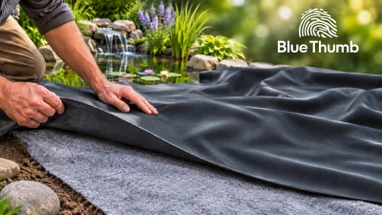
Protective underliner sits between the prepared ground and the waterproof pond liner. The liner holds the water; the underliner helps protect it from contact with the surface below. They do different jobs, so neither replaces the other.
Blue Thumb's Protective Underliner provides additional protection against tears and punctures from stones, roots, and other sharp objects. Ground preparation still matters: remove hazards before covering the excavation.
Blue Thumb Protective Underliner increases the puncture resistance of rubber pond liner by 321%, as stated in our product specifications. It adds protection, but the liner still needs proper installation and careful handling.

How the pond layers fit together
Simplified layer diagram; not to scale. Rockwork inside a pond may need additional protection above the liner.
Old carpet vs. pond underliner
Reusing carpet appeals to DIY pond builders because it may be available at no cost. The concern is variability: one piece of carpet can be very different from another. Inspecting its surface does not tell you everything about its backing, previous use, or suitability beside your liner.
| Consideration | Pond underliner | Old carpet |
|---|---|---|
| Intended use | Protecting pond liner | Indoor flooring |
| Material information | Checkable product specifications | Depends on the original carpet |
| Condition | New material supplied for the project | May contain debris or have worn backing |
| Planning coverage | Available in known widths and lengths | Limited by the size and shape of scraps |
We recommend choosing pond underliner for a new installation. That recommendation does not mean every piece of carpet will damage a liner; it means purpose-made material removes avoidable uncertainty. Do not assume that a soft feel makes reclaimed flooring suitable for your pond.
What about newspaper or cardboard?
We do not recommend newspaper or cardboard as substitutes for protective underliner in a permanent pond. These paper-based materials can break down in contact with damp soil, so a layer that feels cushioned on installation day may not provide dependable long-term protection. Choose purpose-made pond underliner instead of relying on layers of newspaper or cardboard.
Pair underliner with the right pond liner
Choose a liner intended for ponds and aquatic life. Blue Thumb offers PondGard 45 Mil EPDM Rubber Pond Liner in custom-cut lengths. Its flexibility allows it to follow pond contours, while the underliner beneath it supplies a separate protective layer.

Install the protective layer with care
- Prepare the excavation. Remove sharp stones, roots, and debris. Create a smooth, stable supporting surface.
- Cover the whole lined area. Include the bottom, shelves, and sides. Plan overlaps and material grade to suit the site and the liner manufacturer's instructions.
- Place the liner gently. Unfold it into position rather than dragging it across the ground. Allow it to settle into the pond contours without tension.
- Plan protection under rockwork. Additional underliner above the liner can help protect it where gravel or boulders will be placed. Heavy rockwork needs suitable support and careful placement.
For PondGard projects, follow the current manufacturer's design and installation guide. Difficult ground, steep slopes, drainage concerns, or substantial boulders deserve a site-specific installation plan.
How much underliner should you order?
Measure the surface you will actually cover, including the pond's depth, shelves, sides, and edges. Allow for overlaps between pieces. The flat outline at ground level alone will underestimate the material needed.
Blue Thumb's custom-cut protective underliner is 12 feet wide and sold by the linear foot. A quantity of 10 orders a piece 12 feet wide by 10 feet long. Lay out your coverage before ordering, and account for the overlaps needed between strips. You can also browse protective underliner rolls and custom-cut options.
Frequently asked questions
Can I use old carpet under my pond liner?
It is a DIY option some pond builders consider, but we recommend purpose-made pond underliner. Reclaimed carpet introduces uncertainty about backing, contamination, embedded debris, and material suitability. Check with your liner manufacturer before substituting materials.
Can I use newspaper or cardboard under my pond liner?
We recommend protective underliner instead. Newspaper and cardboard can decompose, making them poor choices for lasting liner protection. They are not replacements for purpose-made pond underliner.
Is underliner waterproof?
Protective underliner is not the pond's waterproof barrier. You still need a suitable pond liner above it to retain water.
Will underliner stop every puncture?
No. It adds protection, but it does not make the liner puncture-proof or replace proper ground preparation. Remove sharp objects and handle tools and rocks carefully.
Can underliner go on top of the liner?
Yes. Blue Thumb protective underliner can also be placed above the liner to provide added protection beneath gravel and boulders. This supplements the layer beneath the liner.
Do I need underliner if the soil looks smooth?
A smooth surface is a good start. PondGard's manufacturer generally recommends geotextile between supporting soil and the liner. Follow its guidance for your substrate and project rather than relying on appearance alone.
Build a pond on a dependable foundation
Choose the hidden materials as carefully as the visible stonework. Start with a prepared base, add suitable protective underliner, and install a pond liner designed for the job. Explore Blue Thumb pond liners and underliner to plan your next pond.